Soluciones Integrales de Filtración para la Elaboración del Vino
Garantiza la claridad, estabilidad microbiológica y seguridad del embotellado mediante soluciones integrales de prefiltración, filtración por membrana y filtración estéril para bodegas.
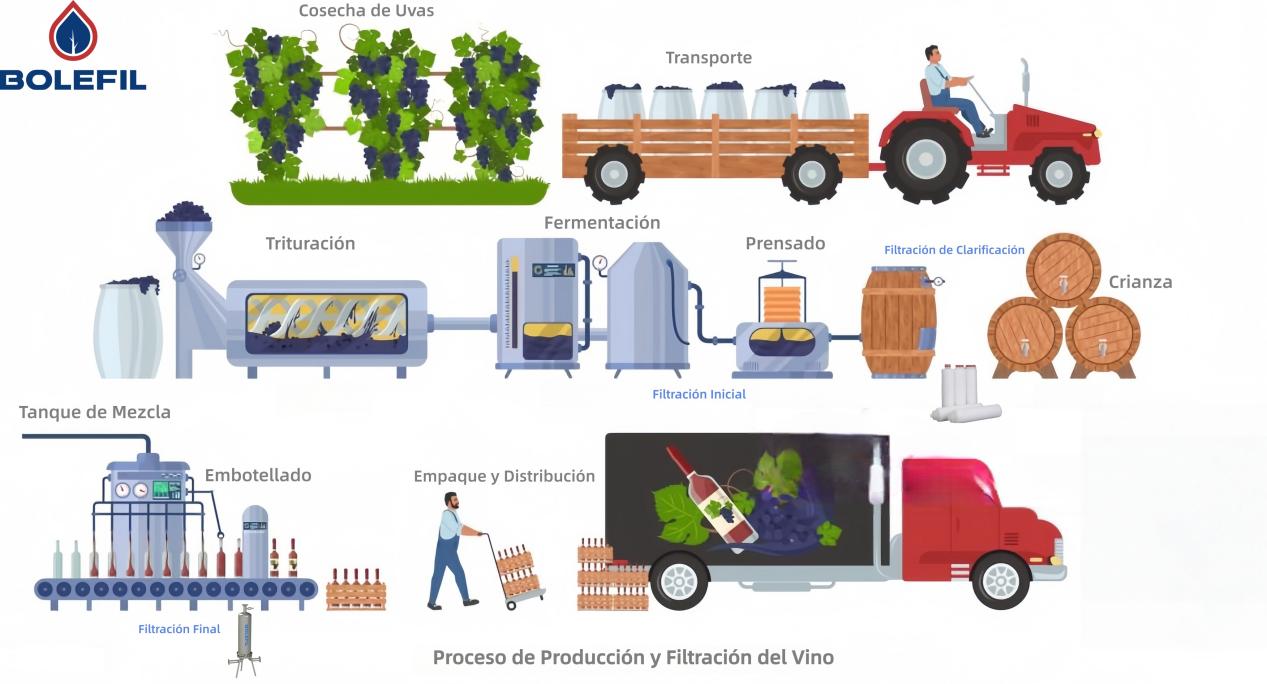
La filtración de vino es un proceso fundamental en la elaboración moderna, que permite controlar la claridad, la estabilidad microbiológica y el perfil sensorial del producto. Desde la uva hasta el embotellado, una filtración adecuada contribuye a mantener la calidad del vino y su consistencia entre lotes.
La filtración de vino cumple dos funciones principales:
Mejora estética y sensorial
Estabilidad microbiológica
La filtración moderna se realiza en varias etapas complementarias, adaptadas a cada estilo y tipo de vino.
Antes de la filtración final, se utiliza prefiltración con cartuchos PP plegados, que permite:
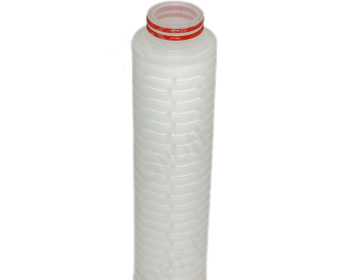
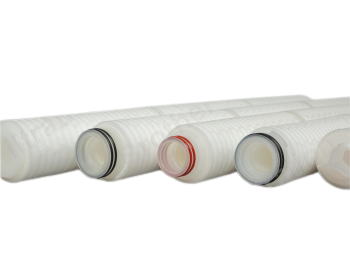
Los cartuchos PP plegados se utilizan en la prefiltración para eliminar partículas grandes y sólidos en suspensión, reduciendo la carga sobre los filtros de membrana PES y prolongando su vida útil y eficiencia.
La filtración final con membranas PES garantiza que el vino esté libre de levaduras y bacterias antes del embotellado:
En la filtración de vino, los cartuchos de microfiltración presentan características únicas y requisitos técnicos específicos. A diferencia de la mayoría de aplicaciones donde los cartuchos son de un solo uso, en la vinificación se enfrentan a múltiples ciclos de limpieza, incluyendo lavado con agua, retrolavado y limpieza química. Esto exige materiales resistentes, excelente durabilidad mecánica y capacidad de mantener la integridad después de múltiples ciclos.
Muchos clientes han observado que, tras la limpieza, algunos cartuchos pierden eficacia o se dañan, lo que demuestra que no todos los filtros que parecen similares son realmente aptos para el vino. Por ello, es fundamental que los fabricantes comprendan cómo los enólogos utilizan y evalúan los cartuchos, y diseñen productos que se ajusten a estas necesidades específicas. Elegir el cartucho adecuado y entender su capacidad de regeneración permite mantener la estabilidad microbiológica y preservar el perfil sensorial del vino, alargando la vida útil del filtro y mejorando la eficiencia del proceso.
Después de la filtración, el vino pasa a la etapa de embotellado, donde es fundamental mantener la estabilidad microbiológica alcanzada:
El embotellado en condiciones controladas garantiza que la eficacia de la filtración se mantenga, asegurando la estabilidad y calidad del vino hasta su consumo final.
El rendimiento de los medios filtrantes depende del sistema de instalación. Los filtros sanitarios de acero inoxidable ofrecen:
La combinación de cartuchos PP + membranas PES + carcasas sanitarias asegura un proceso confiable, eficiente y seguro.
En la filtración de vino, la filtración absoluta es indispensable antes del embotellado para garantizar estabilidad microbiológica y seguridad del producto final.
En la filtración de vino, la elección del sistema y del medio influye directamente en la calidad final del producto:
En general, una filtración optimizada con cartuchos o membranas PES asegura larga vida útil del vino en botella, mantiene su estabilidad microbiológica y preserva sus características sensoriales, mientras que las almohadillas se utilizan principalmente para clarificación inicial y protección de filtros de precisión.
Implementar soluciones modernas de filtración de vino con cartuchos PP plegados, membranas PES de alta precisión y carcasas sanitarias de acero inoxidable permite a las bodegas:
Contáctenos hoy para conocer cómo nuestras soluciones de filtración de vino pueden optimizar su proceso y garantizar un producto final de máxima calidad.
Q ¿Cuál es la duración de los cartuchos de filtración?
Depende del tipo de vino, la turbidez y las condiciones de operación. Normalmente se controla mediante el caudal y la presión diferencial para determinar el momento de cambio.
Q ¿Se puede garantizar un volumen de vino filtrado?
No existe un volumen fijo, ya que cada vino es diferente. Una buena prefiltración ayuda a aumentar significativamente la vida útil del cartucho.
Q ¿Qué diferencia Brother Filtration de otros fabricantes?
Q ¿Qué documentación y certificados ofrecen?
Incluye certificados de calidad, pruebas de integridad, guías de validación y trazabilidad, garantizando cumplimiento y confiabilidad en cada cartucho.
Q ¿Cómo influye el tamaño de poro en la filtración del vino?
Los poros grandes eliminan partículas; los más pequeños retienen levaduras y bacterias. Una selección correcta evita afectar aromas del vino.
Q ¿La temperatura afecta la filtración?
Sí. Temperaturas bajas aumentan la viscosidad y reducen el caudal. Una temperatura controlada mejora el rendimiento.
Q ¿Se pueden reutilizar los medios filtrantes y cómo se realiza la regeneración de cartuchos de microfiltración de vino?
Sí, los cartuchos pueden reutilizarse siguiendo los ciclos de limpieza recomendados por el fabricante, que incluyen lavado con agua, retrolavado y limpieza química. Esto permite conservar una alta eficiencia de filtración y proteger el perfil sensorial del vino dentro de los límites operativos, incluso tras varios usos.
Q ¿Cómo saber si la filtración no es eficaz?
Caudal bajo, Alta presión diferencial, Turbidez después del filtrado
Q ¿Qué relación tiene la filtración con la estabilidad microbiológica?
La filtración reduce microorganismos y ayuda a evitar refermentaciones, garantizando estabilidad en botella.
Q ¿Se puede hacer un test de integridad de cartuchos de membrana en la línea de producción en bodegas?
Sí. Es posible realizar un Test de Retención de Presión (PRT) o prueba de integridad en línea para verificar que los cartuchos mantengan su capacidad de retención de microorganismos. Este control asegura que la filtración final sea confiable antes del embotellado.
Q ¿Cómo confirmar el estado de regeneración de un cartucho?
El estado de regeneración se confirma mediante una combinación de pruebas de caudal, presión diferencial y, cuando es posible, un test de integridad de membrana. Estos controles permiten garantizar que el cartucho todavía cumpla con los estándares de filtración requeridos y proteja el perfil sensorial del vino.
Contáctenos
The ocean occupies most of our planet, and desalination has been used more and more widely over the past 20 years. By using reverse osmosis systems, we help desalination plants to do their job and further help more plants to solve the problem of water shortage.
Every chemical plant is inseparable from industrial water filtration systems. Whether it is the purification and filtration of raw materials and final products or the treatment of industrial wastewater and unwanted chemicals generated during the production process, industrial filtration is a top priority.
Most petrochemical industry products are stored in large containers, such as diesel, gasoline, and fuel oil. This type of storage is highly likely to lead to impurities in the products and affect the product quality. Our mission is to offer efficient and reliable filtration systems for the petrochemical industry so that purification is not a big challenge.
The extremely rapid growth of the pharmaceutical industry has created a greater demand for industrial filtration. Whether it’s upstream cell fermentation, purification, or filtration, we can provide the solution. In addition, We are committed to filtration and separation, protecting the reliability and safety of production equipment.
The food and beverage industry is closely related to the daily life and health of each of us. Therefore, we must meet higher standards to filter these products. As your experts, we help you improve product quality, reduce production costs, and safeguard everyone’s health.
Nature itself has the ability to treat wastewater. But with the huge increase in human production and living activities, it can no longer handle such large amounts of wastewater. We, as industrial treatment producers, help nature to share the burden of wastewater treatment.
Industrial wastewater from mining activities contains high volumes of heavy metals, particulates, and residual chemicals. Wastewater must be purified and filtered in order not to pollute our water resources. We help your plant meet wastewater discharge standards.
In order to extract oil more efficiently and conveniently, large amounts of water must be injected underground to ensure water pressure. And since precious water resources are limited, our technology allows wastewater to be purified so that it can be reused.
When it comes to marine filtration, the first scene that appears in people’s is usually the sea or seawater. But marine filtration is more than seawater. A crucial resource on this planet is seawater. Large amounts of seawater are needed to generate fresh water for drinking and irrigation in locations with a lack of fresh water, just as ships sailing on the ocean need a lot of it for ballast water to keep the ship balanced. Marine filtration is not only about the seawater, but also the transported seawater. The ballast water is a kind of transportation of water. The cargo ships load the seawater from one place and discharge it at another port. The seawater traveled with the cargo ship in ballast tanks. This is the point many people will be indifferent about, the filtration before the discharge of the ballast water. People are familiar that we can not drink seawater directly, because it contains large quantities of salt and contaminants. But why do we need filtration for ballast water? it is just the seawater discharge into seawater. With the development of the environmental protection concept and the perfection of the law, we are constrained to filter the ballast…
The science and practice of extracting metals or metal compounds from minerals and transforming them into metallic materials with specific qualities using a variety of processing techniques is known as metallurgy. With the development of technology and the metallurgy industry, the filtration market in this area grows quickly annually. The need for filtration is increasing and the filter equipment is also developing. In the metallurgy industry, the rolling mill coolant and lubricate system need a filtration system. Equipment coolant and lubricating oil need to be filtered to remove contaminants and accomplish recycling in the metallurgical process in order to save input costs. Filtration can help to extend equipment service life and help equipment stay at optimum level. Based on their different filtration needs and characteristic, they have respective suitable filtration elements. For the rolling mill coolant system, continuous filtration is crucial, so the automative self-cleaning filter is a great choice for this system. When it comes to the hydraulic and lubricating system, the most important point is to remove the tiny metal debris and other impurities generated due to thermalization. Depth filter cartridge can be the best choice for this operation, which can effectively eliminate the undesired micro impurities. Brother Filtration,…
The Paper industry has a centuries-old history, our ancients used the traditional way to produce paper, and now we use advanced technology to produce more delicate and high-quality paper for all kinds of uses. The tissue, the printing, publication, and the packaging, all need paper. Behind the pliable and smooth surface of a piece of paper, there are many procedures that need filtration. The starch slurry, which is the primeval form of the paper requiring filtration to improve the quality and eliminate the undissolved starch particles. The exquisite coated paper, you often find in magazines or the first few pages of a book, is processed by the coating technology. The coating paints also need to be filtered. According to the viscosity level, there are different types of filters suitable for low-viscosity and high-viscosity liquids. Water is the basic and key resource for many industries, pulp & paper is no exception. Using a filtration system to filter lakes or rivers’ water is a cost-effective way to do water resources management. Additionally, wastewater can be reused and lawful discharged after filtration. Filtration plays an important role in the pulp & paper industry, infiltration for this field, automative self-cleaning filter is the most…
Estructura asimétrica de los poros
El filtro de membrana de polietersulfona o cartucho plisado PES es otro tipo ...
Tratamiento de aguas industriales
Los cartucho de sedimentos están disponibles en varios tamaños, micras, y las...
Índice de filtración absoluta del 99,9
Los cartucho de filtro plisado son filtros de superficie que impiden el paso ...
Amplia compatibilidad química
El filtro cartucho plisado ELC™ de Brother Filtration de clasificación absolu...
Microfibra de vidrio de borosilicato
Filtración por cartucho son filtros de superficie que impiden que los sedimen...
Precisión de alto rendimiento
Un tipo de cartucho filtrante plisado de filtración por membrana con una ampl...
Polipropileno submicrónico
Los cartucho plisados son filtros de superficie que impiden que los sedimento...